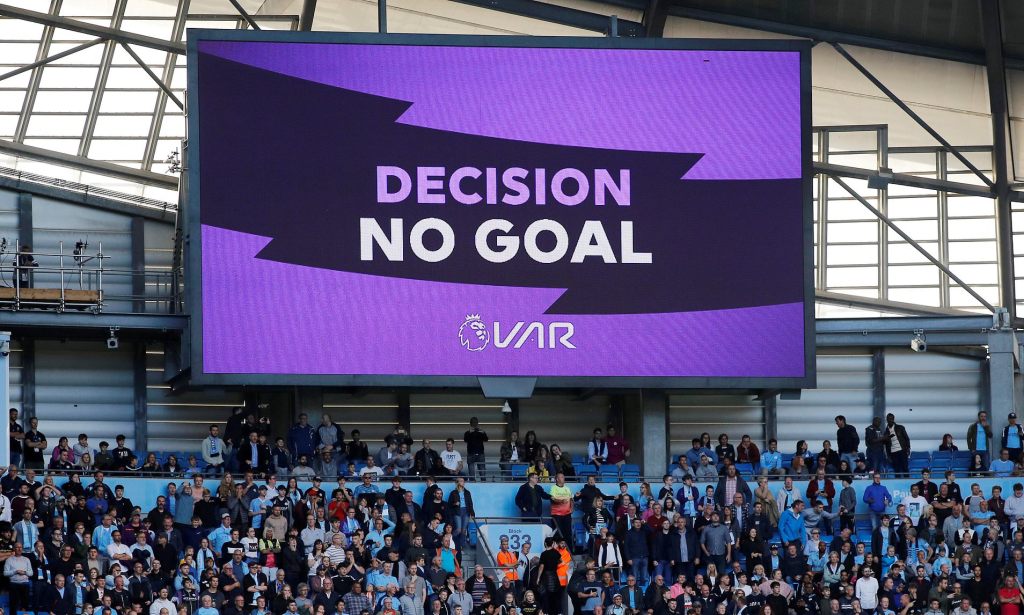
‘VAR will only be used for clear and obvious errors’.
This statement from the Premier League opposes a massive contrast of opinion from what appears to be the majority of the footballing world. Fans, players and pundits have never been more unified in accusing the current VAR system in the Premier League of cruelly punishing teams for incidents that wthout VAR would not even be contested. It is for this reason that Premier League fans hold their breath in moments that should be filled with jubilation. No longer are last second grasps celebrated, as supporters are too worried that 3 video assistant referees are trying their utmost to find the slightest offside shoulder or contact with the defender’s bootlace. However, it is not just goals being chalked off that is the problem. Unjust red cards and dodgy penalties are also rampant in the Prem this season.
So is the Premier Leagues implementation of VAR so different to other leagues and sports? Has the league’s application of VAR left us in the inevitable teething stage? Or are we all just stubborn to change?
Hypocrisy
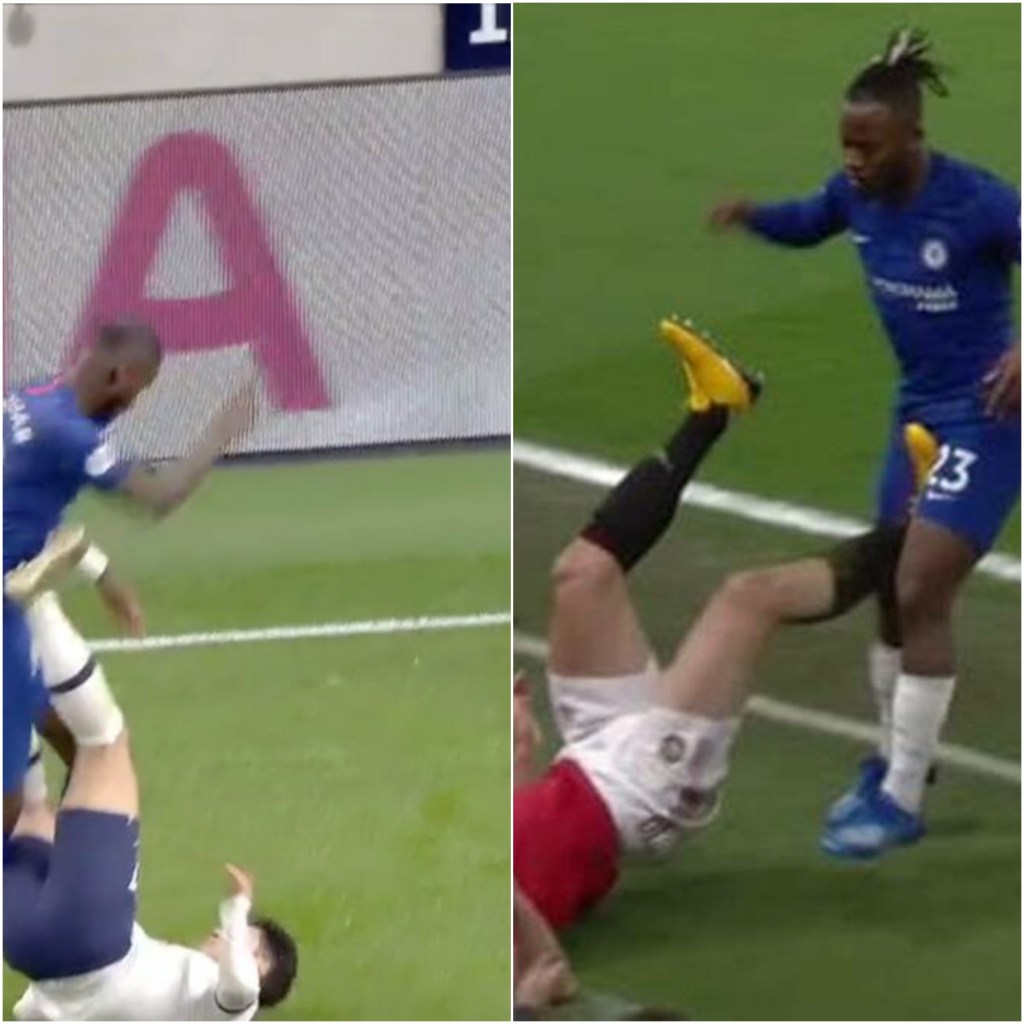
One of the obvious issues with VAR is the inconsistency of decision making. Crucial, season defining moments are made depending on which translation of the rule book the referee decides to go off on the day. Ironically, this is the exact reason why VAR was introduced in the first place. We have seen identical fouls being waved off or resulting in red cards, depending on the game, as seen with the likes of Harry Maguire and Son Heung-Min`s similar ”kick out” incidents. We are seeing handball decisions denying Josh Maja a goal after the ball was blasted into his arm that was so tightly to his side. Yet, in the same week we are seeing players with their arms in unnatural positions block goal scoring opportunities, such as Ngolo Kante in the Liverpool vs Chelsea game.
Other Leagues
We only have to look at the number of VAR applications in other leagues to show the extent of missuse in the Premier League. This season the Premier League has used VAR in 275 incidents. This is more than any other league by some distance. In second place is Serie A with a much lower 111 decisions, with the Bundesliga peaking at a very respectable 84.
These are not the only numbers that show the difference in use. In fact there is a statistic much more telling. VAR has confirmed referee decisions 188 times in the Premier league. In joint second place is Serie A and Ligue 1 with a mere 12. What this shows is that the Premier League has drastically different meanings compared to other leagues for the words, ‘Clear and obvious’.
Will It Improve?
Last week it was confirmed that the handball rule has been revitalised by the International Football Association Board and set to take effect in England from 1st July 2021. This could make the improvements VAR so desperately needs.
According to IFAB, ‘Accidental handball that leads to a goal scoring chance or goal will no longer be penalised’. It has also been stated that the boundry between the shoulder and handball will be, ‘below the armpit’.
This means that we should be seeing less ‘ball to hand’ moments be shrouded in controversy. As VAR can pick up on the most miniscule infrindgements, some of these more grey area incidents have to be specific to the law rather than being decided with common sense. This is what leads to many goals being harshly disallowed. With this law change, a large proportion of these incidents will not be breaking the handball rules under these new revisions.
It is also worth noting that these exact same conversations were happening in other leagues over the last 3 years since VAR was introduced across Europe. As time has passed, these conversations are nowhere near as prevalent.
Final Thought
So this means VAR will be great next year right? Well no, not really. There is still many strict rules that VAR is exaggerating, such as the offside rule. Although these will be present, however, it does mean that rule makers are acknowledging these injustices. How long before we see ammendments to other such rules? Hopefully soon. Will it be ignored, such as the arm-to-body rule? Only time will tell, but surely this can only be considered as positive steps going forward.
 The Angry Spectator